
A Practical Commercial Plumbing Maintenance Checklist for Poplar Bluff Facilities
Clay Peterson
Nov 10 2026 14:00
For businesses in Poplar Bluff and across Southeast Missouri, commercial plumbing maintenance is less about adding another program to the calendar and more about noticing small warning signs before they interrupt customers, staff, students, patients, or tenants. A steady drip, a slow floor drain, or a restroom fixture that runs between uses can signal a larger issue developing behind the scenes.
The most useful approach is clear prioritization: address active leaks and safety concerns first, investigate recurring drainage problems before they become backups, and document patterns that help identify the real cause. This practical checklist can help property managers and facility leaders decide what needs attention now, what should be scheduled soon, and when to call a commercial plumber in Poplar Bluff.
Start With a Walk-Through for Visible Leaks
A short, consistent walk-through can catch problems that are easy to overlook during a busy day. Check under sinks, around toilets, near water heaters, beneath exposed piping, and around equipment connections. Look for active drips, damp cabinets, water stains, warped finishes, corrosion, mineral buildup, or unexplained puddles.
Even a minor leak deserves attention when it is ongoing. Beyond wasted water, moisture can damage flooring and walls, create slip risks, and affect areas below the leak. For retail locations and offices, inspect employee areas, break rooms, restrooms, and utility rooms. Restaurants should also check dishwashing, prep, and handwashing areas. Healthcare facilities and schools should pay close attention to frequently used restrooms and areas serving vulnerable occupants.
Check Restrooms and Flush Valves During Normal Use
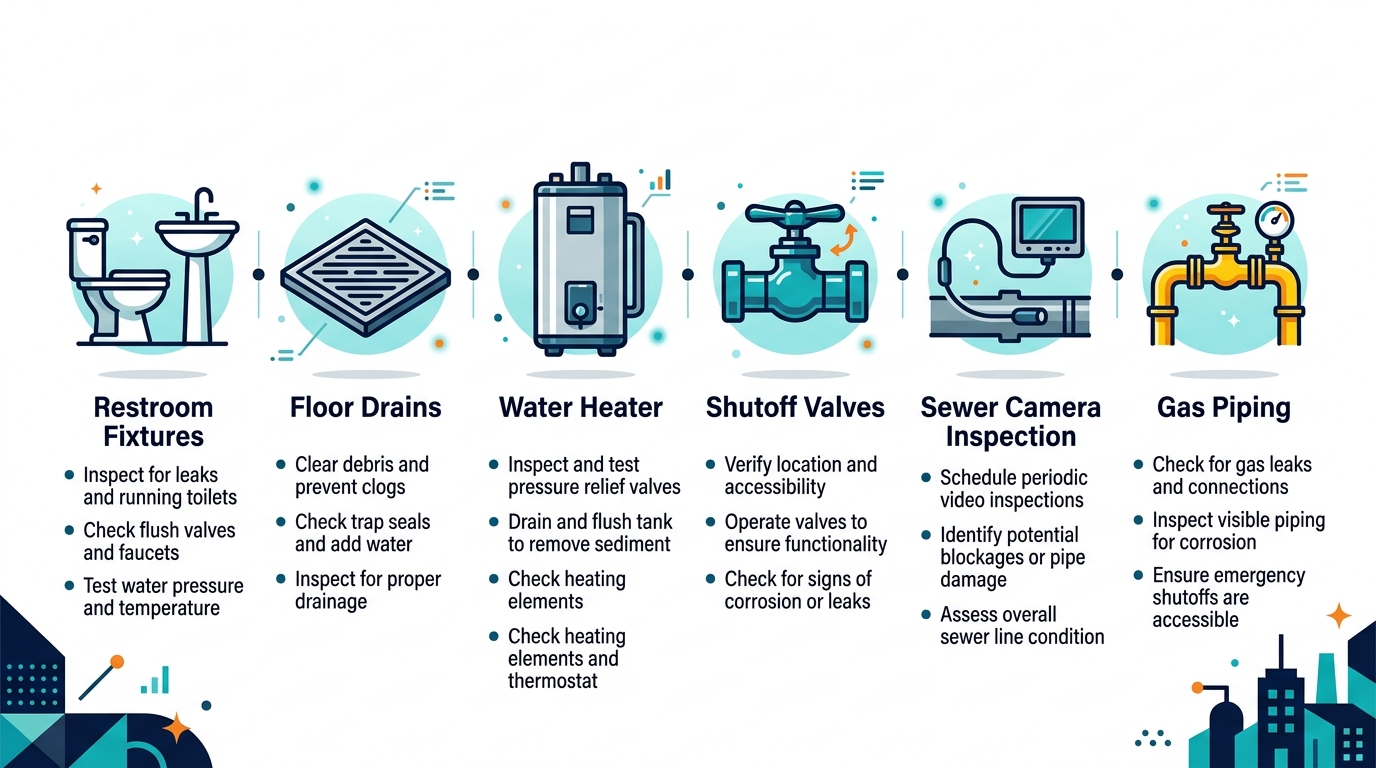
Commercial restroom plumbing experiences heavy use, which makes small issues more disruptive. Test toilets, urinals, faucets, and handwashing sinks for dependable operation. Note fixtures that continue running, flush weakly, fail to flush, refill repeatedly, wobble, leak at the base, or drain slowly.
Flush valves deserve particular attention. A valve that runs too long or cycles unexpectedly can waste a substantial amount of water and may point to worn internal parts, supply concerns, or a fixture issue. A fixture that does not flush consistently can quickly create an operational problem in a restaurant, school, medical office, or high-traffic retail location.
For plumbing for businesses, prioritize any restroom concern that affects sanitation, accessibility, customer experience, or the number of available fixtures. If a problem repeats after a temporary adjustment, schedule an evaluation rather than waiting for a complete failure.
Keep Floor Drains Clear and Watch for Backup Signs
Floor drains are often out of sight until they stop doing their job. Inspect drains in kitchens, restrooms, mechanical rooms, utility areas, storage spaces, and other locations where water may need a safe path away. Remove visible debris from drain grates when appropriate, and watch for standing water, slow drainage, foul odors, gurgling, or water rising through the drain.
A commercial floor drain that keeps backing up is not simply an inconvenience. It can create a slip hazard, damage inventory or equipment, interrupt operations, and indicate a restriction farther along in the drainage system. Restaurants may see buildup associated with frequent food-service use, while older commercial buildings may have scale, debris, root intrusion, or damaged piping affecting drainage.
Do not rely on repeated chemical drain products as a long-term answer. They may not reach the underlying obstruction and can complicate diagnosis. Commercial drain cleaning in Poplar Bluff may be appropriate when a drain is slow, repeatedly clogged, or showing early backup signs.
Take Recurring Slow Drains Seriously
A single slow sink can sometimes be a localized issue. Several slow fixtures, however, may point to a branch-line or main-line restriction. Track which fixtures are affected, how often the problem occurs, whether it follows heavy use, and whether gurgling or odors are present.
That information helps a facility plumber in Poplar Bluff determine the most sensible next step. Conventional drain cleaning may clear a localized blockage. Hydro jetting may be useful when buildup on pipe walls, grease-related accumulation, or stubborn debris is contributing to repeated restrictions. A camera inspection may be the better first choice when the cause is unclear, the issue returns after cleaning, or there is reason to suspect pipe damage, roots, offset joints, or another structural concern.
The goal is not to choose the biggest service automatically. It is to match the method to the condition of the line and avoid repeated disruption from an unresolved problem.
Monitor Water Heaters and Hot-Water Performance
Reliable hot water matters in restaurants, healthcare settings, schools, offices, and many other commercial spaces. Check for water around the unit, corrosion, unusual sounds, inconsistent temperatures, discolored water, or a noticeable drop in hot-water availability. Staff complaints that hot water is taking longer to arrive or running out sooner than usual should be documented.
Water heater concerns should be prioritized based on their impact. No hot water, an active leak, signs of gas-related trouble, or water near electrical components requires prompt professional attention. Less urgent performance changes still merit a timely inspection, particularly before a busy operating period.
Advanced Plumbing can help commercial clients in Poplar Bluff and Southeast Missouri evaluate water heater repair or replacement needs with practical guidance based on the equipment condition, demand, and disruption risk.
Exercise Shutoff Awareness and Inspect Mechanical Piping
Facility teams should know where primary water shutoff valves and area-specific shutoffs are located. Ensure they remain accessible, clearly identified, and not blocked by storage. If a valve is difficult to turn, unknown in function, or has not been addressed in a long time, make a note for a professional evaluation. In an active leak, knowing how to isolate water can limit damage while help is on the way.
Also watch exposed mechanical piping for corrosion, drips, damaged insulation, loose supports, unusual vibration, or changes around equipment connections. For gas piping, take any odor of gas, hissing sound, suspected leak, or damaged line seriously. Avoid attempting repairs. Leave the area when necessary, follow site safety procedures, and contact the appropriate utility or qualified plumbing professional for guidance.
Advanced Plumbing provides gas line and mechanical piping work for businesses throughout Southeast Missouri, helping facilities address repair needs and planned changes with clear communication.
Know the Sewer Warning Signs That Need Fast Action
Sewer concerns can escalate quickly in commercial settings. Warning signs include sewage odors, repeated toilet backups, multiple drains slowing at once, water appearing at floor drains, gurgling fixtures, wastewater outside, or a sudden change in how several fixtures drain. These are not issues to monitor indefinitely.
Limit water use in the affected area when practical and document what is happening. A commercial plumber in Poplar Bluff can assess the system and recommend an appropriate next step, which may include drain cleaning, hydro jetting, a sewer camera inspection, pipe locating, or a repair solution. In some cases, trenchless sewer repair or UV pipe lining may be considered when the line condition and site layout support it.
Document Patterns Instead of Repeating Temporary Fixes
A simple plumbing log can turn scattered complaints into useful information. Record the date, location, fixture or drain involved, symptoms, time of day, recent activity, steps taken, and whether the issue returned. Photos or short videos can also be helpful when safe to capture.
This record is especially valuable for property managers overseeing multiple suites, restaurant operators tracking kitchen and restroom concerns, and schools or healthcare facilities coordinating maintenance across busy buildings. It helps distinguish a one-time clog from a pattern that warrants a more complete evaluation.
Prioritize by Impact, Not by a Generic Schedule
Not every concern needs the same response. Use a straightforward priority system:
- Address immediately: Active leaks, sewage backups, no hot water where operations depend on it, suspected gas leaks, overflowing fixtures, and water near electrical equipment.
- Schedule soon: Recurring slow drains, running toilets, intermittent flush-valve problems, water heater performance changes, persistent odors, and valves that are difficult to access or operate.
- Monitor and document: Minor one-time drainage changes or isolated fixture concerns that do not repeat, while remaining ready to escalate if the pattern changes.
This approach supports sound commercial plumbing maintenance without forcing every facility into a one-size-fits-all arrangement. It keeps attention focused on risks that can affect safety, sanitation, property condition, and daily operations.
FAQ
When should a business call for commercial drain cleaning?
Call when a drain is repeatedly slow, clogs return, odors persist, water backs up, or multiple fixtures are affected. Early cleaning can often reduce the chance of a more disruptive overflow or closure.
Is hydro jetting appropriate for every commercial drain?
No. Hydro jetting can be highly effective for certain buildup and recurring line restrictions, but the pipe condition and cause of the problem should guide the decision. A professional evaluation may include a camera inspection when the line history or symptoms suggest damage or another underlying issue.
Why would a camera inspection be recommended?
A sewer camera inspection can help identify the source and location of a recurring issue without guessing. It may reveal buildup, roots, pipe damage, offsets, or other conditions that influence whether cleaning, repair, or another solution is appropriate.
What plumbing problems should a restaurant prioritize?
Restaurants should act promptly on floor-drain backups, repeated kitchen drainage restrictions, restroom failures, hot-water interruptions, leaks, and any sewer odor or wastewater concern. These issues can affect cleanliness, staff safety, customer experience, and operations.
How can Advanced Plumbing help our facility plan next steps?
Advanced Plumbing serves Poplar Bluff and Southeast Missouri with practical commercial plumbing guidance. Our team can evaluate reported issues, explain the likely priorities, and recommend an appropriate path forward for drains, fixtures, water heaters, sewer lines, gas piping, and mechanical piping.
To schedule a commercial plumbing evaluation for your property, restaurant, school, retail location, office, or healthcare facility, contact Advanced Plumbing at (573) 718-1616. We will help you identify the concerns that deserve attention now and plan sensible next steps for the rest.