
Trenchless Sewer Repair vs. Excavation: How to Choose the Right Approach in Southeast Missouri
Clay Peterson
Oct 22 2026 13:00
If a sewer line is cracked, root-damaged, leaking, or repeatedly backing up, the right repair is not always the same for every property. Trenchless sewer repair can often restore a qualifying pipe with far less digging, while traditional excavation may be the safer choice for collapsed, severely misaligned, or inaccessible lines. At Advanced Plumbing, we use camera findings, pipe condition, access, and your long-term plans to explain the options clearly—without pushing one solution.
For homeowners and commercial property managers in Poplar Bluff and across Southeast Missouri, a sewer problem can quickly disrupt daily life or business operations. Understanding the difference between UV pipe lining, other no-dig sewer repair options, and excavation can make the next step feel much more manageable.
What Is Trenchless Sewer Repair?
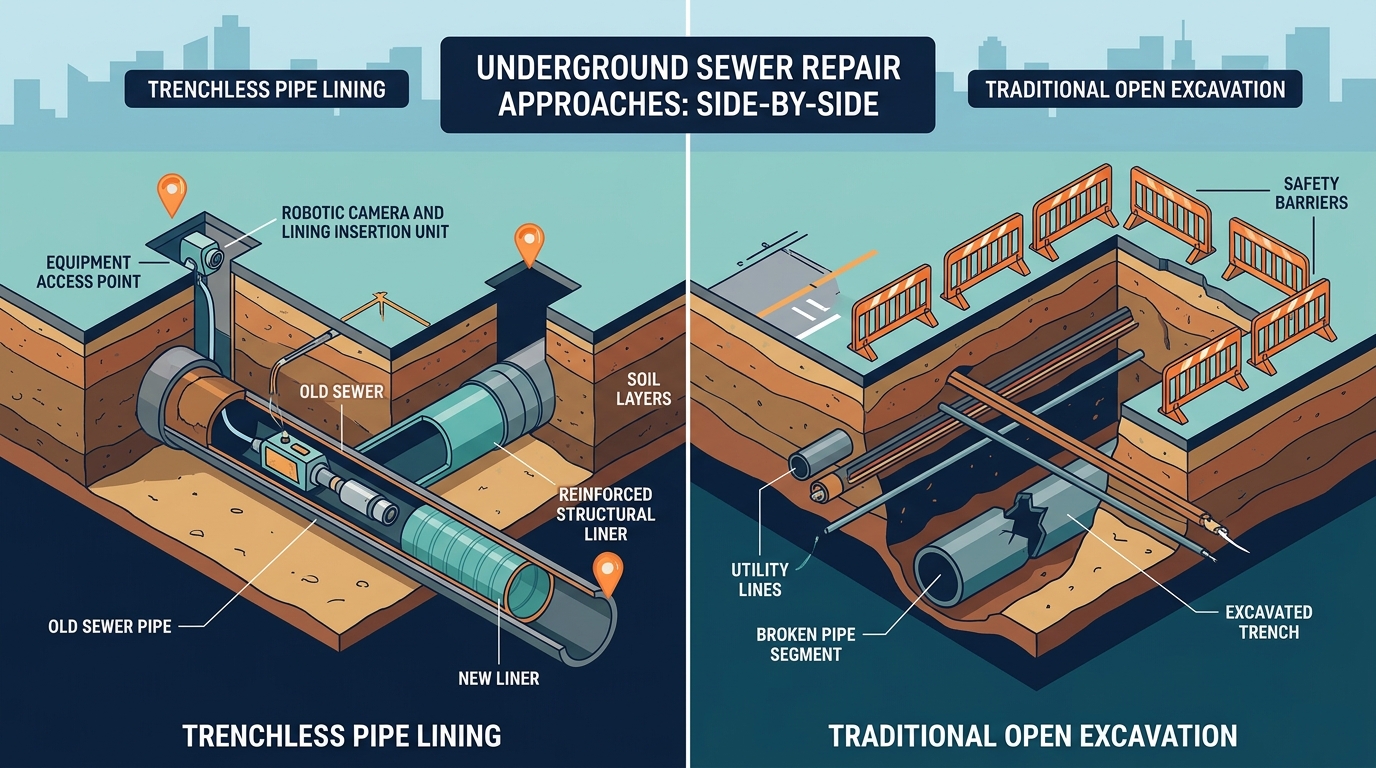
Trenchless sewer repair is a broad term for methods that repair or renew a sewer line without digging a continuous trench across the entire pipe route. Instead of exposing the whole line, a plumber may work through existing access points or a small, targeted entry point.
For the right pipe, this can help protect landscaping, driveways, sidewalks, flooring, and other areas that would otherwise be disturbed during a full replacement. That is why many property owners looking for trenchless sewer repair in Poplar Bluff ask about it first.
However, “trenchless” does not mean every sewer issue can be fixed without digging. The existing pipe must still have enough structural continuity and a workable path for the selected repair method.
How UV Pipe Lining Works
UV pipe lining is a trenchless pipe rehabilitation method. After the line is inspected and prepared, a resin-saturated liner is positioned inside the existing pipe. Ultraviolet light is used to cure the liner, creating a new pipe-like surface within the old line.
When conditions are right, UV pipe lining in Poplar Bluff can be a practical way to address certain cracks, joints, root intrusion damage, and aging pipe interiors while reducing surface disruption. It may be especially appealing when a sewer line runs beneath established landscaping, a driveway, a finished area, or a busy commercial space.
Advanced Plumbing evaluates each line individually. A liner is not a universal patch for every sewer problem, and a responsible recommendation begins with understanding what is actually happening underground.
When Pipe Lining May Be a Good Fit
Pipe lining may be worth considering when the existing sewer pipe generally follows a usable path and has damage that can be addressed from the inside. For example, lining may be an option when the pipe has:
- Cracks, worn joints, or small openings that are causing infiltration or recurring problems
- Root intrusion that has been cleared and a pipe structure that remains suitable for rehabilitation
- Localized deterioration that does not prevent equipment or the liner from passing through the line
- A route beneath hardscaping, landscaping, or occupied areas where minimizing disturbance matters
- Access points that allow the crew to inspect, clean, prepare, and complete the repair properly
For commercial properties, a no-dig sewer repair approach may also help reduce interruptions around customer areas, parking lots, landscaped entrances, or interior spaces. That does not mean there will be no work area or downtime at all, but it can limit the scope of excavation compared with a full open-trench replacement.
When Traditional Excavation May Be Necessary
Excavation remains an important and reliable sewer line repair option in Poplar Bluff. In some situations, exposing and replacing a section—or the full run—of pipe is the best way to create a sound, serviceable system.
Traditional excavation may be required when a pipe has collapsed, is badly crushed, has major offsets, has a severe belly that affects drainage, or cannot be properly cleaned and prepared for lining. It may also be needed when the pipe route must be corrected, a connection has failed beyond rehabilitation, or there is not adequate access for trenchless equipment.
For a commercial site, excavation may be the better long-term choice if the sewer layout needs to be rerouted, capacity needs to be addressed, or a damaged segment is affecting critical operations. Advanced Plumbing explains why excavation is being considered and what parts of the property may be affected before work begins.
Why a Camera Inspection Comes First
A sewer camera inspection is one of the most valuable steps in choosing between lining and excavation. It allows our team to see inside the line rather than guess based only on a backup, slow drains, odors, or surface symptoms.
During a camera inspection, Advanced Plumbing can identify issues such as cracks, roots, grease buildup, separated joints, standing water, blockages, pipe deterioration, and collapsed areas. Pipe locating can also help determine where the damaged section runs beneath the property.
This information supports a more accurate recommendation. Before proposing UV pipe lining, we need to confirm that the pipe can be cleaned, that the route is workable, and that the condition of the line supports rehabilitation. Before recommending excavation, we can use the same findings to explain the location and severity of the problem.
Access, Disruption, and Downtime Considerations
Every sewer repair affects a property differently. A homeowner may be concerned about a flower bed, patio, driveway, or finished basement. A property manager may need to protect tenant access, plan around restrooms, coordinate with vendors, or keep a restaurant, retail location, school, or healthcare facility operating as smoothly as possible.
Trenchless repair can reduce digging, but it still requires access to the sewer line and a controlled work area. Cleaning, preparation, inspection, and curing all take planning. In some cases, use of plumbing fixtures may need to be limited during portions of the work.
Excavation usually involves more visible disruption because the pipe must be uncovered. It can require removal and restoration of soil, landscaping, pavement, or other surfaces. Yet when excavation is the most durable and appropriate repair, choosing it can avoid repeated short-term fixes and provide a clearer path for correcting the underlying issue.
Planning for the Long Term
A sewer repair decision should consider more than today’s blockage. Think about the pipe’s condition, the history of backups, property improvements you expect to make, access for future service, and the consequences of another failure.
For homeowners, that may mean avoiding a repeat disruption after renovating a yard or driveway. For commercial property managers, it may mean coordinating repairs around occupancy, business hours, safety requirements, and preventive maintenance needs. If heavy use, grease, roots, or recurring debris has contributed to the problem, cleaning or hydro jetting may also be part of a broader maintenance plan.
As a Southeast Missouri plumber, Advanced Plumbing focuses on practical recommendations. We will walk you through the camera findings, outline viable repair paths, discuss likely property impacts, and help you weigh near-term needs against long-term reliability.
Residential and Commercial Sewer Repair Guidance
Whether you own a home, manage rental properties, or oversee a commercial facility, you deserve a clear answer about your sewer line. Advanced Plumbing provides residential and commercial trenchless sewer services throughout Poplar Bluff and Southeast Missouri, along with excavation when conditions call for it.
Visit our residential trenchless sewer service page
to learn more about options for your home, or explore our commercial trenchless sewer service page
for business and facility needs. If you are dealing with repeated drain backups, suspected sewer damage, or need a second opinion on repair options, request an evaluation from Advanced Plumbing. We will assess the line and explain the alternatives so you can make an informed decision.
FAQ
Is every damaged sewer pipe a candidate for lining?
No. A pipe may not be suitable for lining if it is collapsed, severely offset, badly crushed, improperly sloped, inaccessible, or too damaged to be cleaned and prepared correctly. A camera inspection helps determine whether lining is a realistic option.
Does trenchless sewer repair mean there is no digging at all?
Not always. Trenchless methods are designed to avoid a long, continuous trench, but crews may still need access points or small targeted excavations. The amount of digging depends on the line, access, and repair method.
Can UV pipe lining help with root intrusion?
It may help when roots have entered through joints or cracks and the pipe remains structurally suitable for lining after proper cleaning and preparation. If roots have caused major breaks, offsets, or collapse, excavation may be necessary.
How does a sewer camera inspection affect the repair recommendation?
The camera shows the condition and location of the problem inside the pipe. That allows Advanced Plumbing to determine whether cleaning, lining, spot repair, excavation, or a combination of services makes the most sense for the property.
Can commercial properties use trenchless sewer repair?
Yes, many commercial properties may be candidates for trenchless repair, particularly when reducing disruption to parking, landscaping, customer areas, or building interiors is important. The line’s condition, access, and operational needs must still be evaluated before a method is selected.